Antoine Pezé

Thirteen years growing products and the teams that build them.

Twice CPO and co-founder, Product Owner at OCTO, UX and agile coach at Adeo. A cognitive engineer by training, I teach user research at Gobelins and Sorbonne Nouvelle in Paris. And I keep designing and shipping my own products.

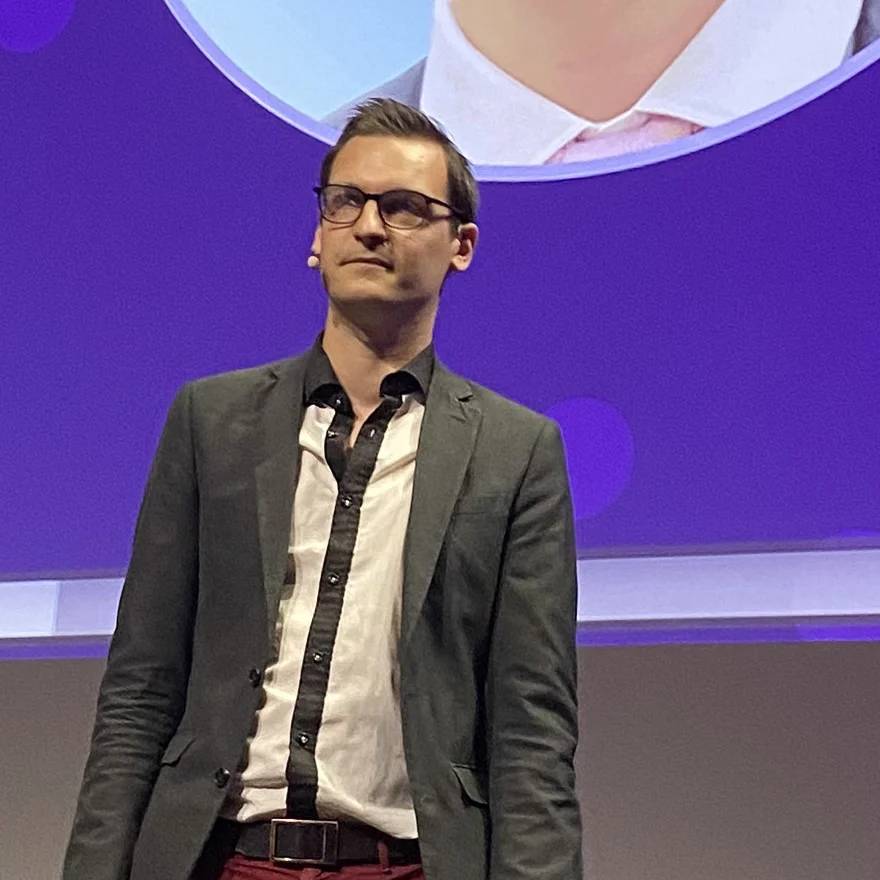
Antoine Pezé on stage at FLUPA UX Days 2026

FLUPA UX Days 2026 · "The choices we didn't make: when a designer takes back power over the code"

€350k
in signed contracts at Synopsis
€1.3M
raised at Stackeo
500,000
customer feedbacks analyzed by Synopsis
100+
workshops facilitated at Adeo

Turning customer feedback into product decisions

Synopsis uses AI to analyze customer feedback (reviews, surveys, social media, customer service) and turn it into prioritized pain points and a living customer journey. I co-founded the company and owned everything product, from the first interview to signed contracts.

€350k in signed contracts
500,000 feedbacks analyzed
2 large international accounts

What I owned

  • User research
  • Product strategy and roadmap prioritization
  • Software design
  • Building the commercial offers
  • Driving marketing and sales

On the data side

Synopsis taught me to handle data at scale. Hundreds of thousands of feedbacks from very different sources, to collect, clean, classify by topic and emotion, then turn into reports and trends: which pain points are rising, which ones drop after an action, which weak signals appear before they become a problem. I designed those reports with the e-commerce and customer experience leaders who used them every month.

On the AI side

Synopsis was my first AI-based product, built on the models of the time (GPT-3, GPT-4, Gemini Flash). We evaluated quality ourselves: several models compared on a few hundred hand-tagged examples. To earn our clients' trust, we calibrated on an extract of their own data that they had tagged themselves: the comparison spoke for itself. AI also shaped the strategy: splitting long interviews into relevant verbatims remained too fragile, so we gradually pivoted from UX teams to marketing teams and their surveys, short texts the machine handled well.

< 2%wrong classifications
15%"average" results: right, but could be more precise

Since 2025, Synopsis has been running at a slower pace: of the three co-founders, I am the only one still active, and I keep delivering feedback analysis for our automotive client, at about 5% of my time.

Two clients, under NDA

International automotive group

Analyzed 150,000 customer feedbacks from the sales websites of more than ten brands, for the e-commerce leadership.

  • Verbatim reports: 1 week → 2 hours
  • Customer satisfaction: +10% in 6 months on NPS

Luxury house, global group

Analyzed 250,000 feedbacks across social media, blogs and forums, for the Customer Experience leadership.

  • Engagement measured after every launch
  • Monitoring of weak signals and competitors
“We wanted to separate usability issues, technical issues and business issues in our customers' feedback. With Synopsis it is simple, and we also see how each one evolves over time. Everything is automated.”
Head of e-commerce, international automotive group

The product

A topic: volume, NPS, generated summary and emotion breakdown
The customer journey, with an emotion score and a top pain point per step
Issue prioritization: usability, business, technical
Feedback split by the team in charge
A message split into verbatims, each with its emotion and topic

Building a product team in the middle of a pandemic

Stackeo, an INRIA spin-off, helped companies take their connected-device projects from prototype to scale. Two products: the Biz Assistant, to simulate the profitability of an IoT project, then the Ops Assistant, to monitor a device fleet. We raised about €1.3M and launched in spring 2020, during the first lockdown, with a team of up to ten people spread across Lyon, Paris and Réunion Island.

€1.3M raised
218 market conversations in two years
10 people on the team at its peak

What I owned

  • Product organization: feature team, two-week iterations, roadmap and backlog, delivery dashboards
  • Rituals: stand-up, weekly refinement, demo and retrospective, separate team and product retrospectives, monthly health check
  • Discovery: interview guide, 50 interviews in 2020, experience maps, design sprints, private beta tracked in Amplitude
  • OKRs, value proposition and pitch shared by the whole team, offers and pricing
  • Onboarding path (product culture, active listening) and intern mentoring

The market did not follow and we did not sign customers. IoT startups had built their own tools, and in large companies only 10 to 20% of projects ever scaled. We pivoted twice, from the technical buyer to the business decision-maker, then from simulation to monitoring, before turning to consulting. It is the experience that taught me the most: keeping a team on course when the signals are bad, and keeping a climate where everyone dares to try.

“Working with Antoine means having the right to be wrong, start over, correct yourself and improve!”
Charlotte Dieleman, front-end developer at Stackeo

2020 · 2022

Two products, one team

A first story mapping workshop in February 2020, two design sprints in the spring, a private beta in the fall, then releases every two weeks. Every beta tester insight was tagged, linked to an experience map and discussed in roadmap reviews, with an indicator tracking features started without prior discovery.

50user interviews in 2020
17active testers in the private beta
43items shipped in four months on the second release
4.5 to 4.8out of 5: team satisfaction in retrospectives (2020)
Biz Assistant: simulated profitability of an IoT project (demo data)
Ops Assistant: monitoring a fleet of nearly 3,000 devices
Roadmap review: user stories per iteration, progress and features without discovery
The first story mapping workshop, February 2020

Growing a product team at the heart of an international group

At Atecna, I co-founded and co-led the Consulting team, from zero to ten consultants. On assignment at Adeo (Leroy Merlin group), I helped grow the Digital Tribe from a lab into a 24-person team based in Lille, building products for the group's employees across several countries. I onboarded, trained and grew the Product Owners and designers, and co-led a feature team.

24 people in the tribe
9 products built
100+ workshops facilitated

What I owned

  • Co-founded and co-led Atecna's Consulting team (10 people)
  • Onboarded and upskilled 3 Product Owners and 5 UX/UI designers
  • Product organization of the tribe: feature teams, roles, rituals, shared vision
  • An active community of user ambassadors across several countries
  • Field operations in Madrid, Lisbon, Paris and Lille

myHome: adoption without a mandate

The app for employees in their role as customers of the group. Nobody had to use it: it spread through a community of ambassadors, not through management.

85%of AKI Portugal employees are active users
61%across all of Portugal
79%in French brands outside Leroy Merlin

The Digital Tribe, its workshops and its team directory

The Digital Tribe around a table
A wall of sticky notes after a framing workshop
The tribe's illustrated team directory

2016 · 2019

myHome: from one pilot country to fourteen brands

The app that lets group employees be recognized as customers in every brand: perks, receipts, product reviews, surveys. I joined in 2016 as UX and methods coach, at OCTO, and followed it with the Digital Tribe. A three-day hackathon in Lisbon with a production release on site, launch in Portugal, a French pilot in 2017, then brand-by-brand integration, carried by 106 ambassadors. Every feature was tested as a mockup with users before being built.

106ambassadors driving the rollout, brand by brand
× 3.6purchases by Zôdio employees at Leroy Merlin after activating myHome
4.8 ★App Store rating (4.7 on Google Play)
7,193product reviews posted by employees
Every brand's perks, in a single app
Share of employees who are active users, by brand (June 2019)
The rollout in France, brand by brand
Four-month OKRs: objectives, indicators, actions
2016 framing: the engagement pyramid, from employee to ambassador

2018

My Dev: from framing to prototype in five weeks

A framing run with Leroy Merlin's HR teams: understand the history of performance reviews in the company, write a shared vision, split roles, prioritize with a story map, then prototype the future tool employees would use to follow their professional development.

Exploration: the timeline of performance reviews at Leroy Merlin, rebuilt with the teams
Prototype: the achievements journal
Prototype: the annual review, from the employee and the manager side

From UX to product

I joined OCTO as a UX consultant and broadened my role to product: Product Owner working side by side with development teams, for large companies and for the public sector. Understanding users was no longer enough; I also had to decide what to build, in which order, and ship it.

What I owned

  • Product Owner at Société Générale, Total and Leroy Merlin: backlog, prioritization, user stories
  • Public sector: French government startups (beta.gouv), Ministry of the Interior, ANAH
  • Keolis: an app for bus drivers, designed and built in the field
  • GAN Assurances: turning a pricing tool into a product, with measurable success criteria
  • Europ Assistance: framing a roadside assistance app factory for several countries
  • UX awareness workshops and internal products for HR and training teams

2015

Keolis: coding in the bus, right behind the driver

Keolis wanted to make its bus drivers' daily work easier. We started with "walk in my shoes" days in three networks, then gathered about thirty drivers in Paris so they could sketch their own screens. For three months, the whole product team (developers, PO, product manager and me) set up shop at the depot and inside the bus, right behind the driver, to watch their interactions with passengers and fix the app the same day. We convinced someone close to the IT director, reluctant at first, to come to the field with us: he came back enthusiastic.

18drivers, supervisors and inspectors shadowed for a full day
30drivers in co-design workshops
3 monthsfrom first sketch to prototype in service, in one-week iterations
0crashes during the test period
“I use everything, do not change a thing.”
A driver, during the in-service test
The tablet in service: next stops, early and late shown in color
From the drivers' paper sketch to the final screen
In the bus, next to the driver, while they use the app
The experience map of a driver's day, with their mood curve
The tablet mount installed in the cab
The team at the bus depot

Watching users, literally

Where I started: eye-tracking user tests for major brands, more than 200 sessions where you see exactly where the eye lands, and where you learn to stop trusting what people say they do. And my first end-to-end design projects, such as the website of the Fondation pour la Recherche Médicale.

200+ user tests

What I owned

  • More than 200 eye-tracking user tests
  • Testing LVMH's future corporate website: 15 participants in the lab, two versions compared on five components
  • Full design of the Fondation pour la Recherche Médicale website with the client: framing workshops, personas, journeys, information architecture, wireframes
  • Co-author of the white paper "Le Responsive Design" (2013)

For

  • LVMH
  • Hermès
  • AXA
  • Decathlon
  • Groupe Beaumanoir
“He did not hesitate to share his ideas and helped implement several new processes in the company. He feels at ease when dealing with clients, and has a very good relationship with them.”
Jérémie Eskenazi, his manager at Miratech

2013

Fondation pour la Recherche Médicale: designing a website with its client

I designed the whole new website with the Foundation's teams: framing workshops, analysis of the existing site and its audience, benchmark, four personas and their journeys up to the donation, a new information architecture, then wireframes delivered in batches.

Fondation pour la Recherche Médicale: the journeys of the four personas, on the wall
Anne's journey, from entry point to donation
The white paper "Le Responsive Design", which I co-authored

How I lead a product team

Six principles honed at the Digital Tribe, Stackeo and Synopsis. Each one links to a free course material: my method, documented.

  1. 01

    Small, stable teams

    A feature team is at least one PO, three developers and one designer, who stay together and own their product end to end.

  2. 02

    A written vision, measured objectives

    A one-sentence mission, a three-year vision, objectives with their indicators. Otherwise every team pulls in its own direction.

  3. 03

    The field as a ritual

    User tests every month, interviews before every major initiative, and a living experience map rather than gut feelings.

  4. 04

    Users in the loop

    A network of volunteer ambassadors who test, report pain points and drive adoption around them, with no top-down mandate.

  5. 05

    Rituals that make us learn

    Demo and retrospective every two weeks, roadmap review every month, strategy committee every quarter.

  6. 06

    Time to grow

    80% of the time on products, 20% to improve our practices and share them. And regular feedback, both ways.

My lab

I build my own apps end to end: research, design, development, launch. They are not startups; they are my testing ground for new tools, especially AI agents, so I can bring what really works back to a team.

iOS and Android app · Live

RiftManager

The companion app for players of the Riftbound card game: matches, decks, collection, card market. Designed, built, launched and monetized on my own, with a Premium subscription.

4,000 downloads

13%of new users still active one month later
230cards added per month, on average, by each collector

Metrics I instrumented myself in summer 2026 (September cohort).

On the data side

On the data side, RiftManager is also an analysis engine: I collect and normalize tournament results from around the world (Europe, the Americas, China), extract the winning decks and metagame trends, and track card prices across several markets to spot the biggest moves.

See the app →
iOS app · Coming soon

Lorecat

Cards and quizzes for Tolkien and Harry Potter fans. Every card is written from sourced facts by a team of more than twenty-five specialized AI agents I designed. One example: the reviewer judges each text the way a demanding editor would, without knowing who wrote it, and sends it back for rewriting until it passes.

127 cards on Middle-earth

Learning app · In progress Prodiz Level up on product jobs in a few minutes a day: UX, product management, sales, marketing, management, data, finance. Short sourced cards, quizzes, learning paths. 10 domains, 500+ cards
UX research tool · Live UX Manager From verbatims to insights and the experience map: the tool follows the method I teach and is used in class at Gobelins. Analysis runs on the user's own AI, through MCP. Used in class →

Teaching and coaching

Alongside my roles, I have always kept three activities that are about helping others grow: teaching, coaching and mentoring. They directly shape the way I lead a product team: explain things simply, ask the right questions, let people find their own way.

Teaching

Since 2017, I have taught user research, UX and Design Thinking at Gobelins and Sorbonne Nouvelle, and in companies (Ubisoft, Accor, Meetic). About 400 people trained.

My classes are mostly workshops: learners run real interviews, build an experience map, test a prototype. Teaching forces me to make what I do simple, which is exactly what a product leader does every day with their team and their management.

See the 30 course materials, free to use →

Coaching

I support professionals taking on new responsibilities. At Zodio, a brand of the Adeo group, I helped a manager set up a UX approach in her team. Individually, I coached two people who wanted to develop their leadership.

I do not hand out ready-made answers: I listen, I ask questions, and I help each person find their own way of doing things, then try it in the field.

Coaching →

Mentoring

At Gobelins, I mentor students on their master's thesis and projects, and sit on juries. Over several months, I help them frame a question, keep a rigorous approach and defend their choices.

It is very close to management: set a direction, check in regularly, and let the other person find their own path instead of doing it for them.

Foundations and community

  • Cognitive engineer, ENSC Bordeaux, 2013: understanding how humans work to design systems that fit them
  • FLUPA board, the French association of UX professionals: 2013 · 2014, and again for the 2025 · 2026 season
  • Speaker at FLUPA UX Days 2026: "The choices we didn't make: when a designer takes back power over the code"
  • HumanTalks Paris staff, a monthly developer meetup, 2015 · 2018
  • YouTube channel about active listening
“The workshops and facilitation were fantastic, and above all energetic.”
José Marin, development team